Hòa Hảo Buddhism Today
More than eighty years after its founding, Hòa Hảo Buddhism remains a living tradition practised by millions of people, overwhelmingly in the Mekong Delta of southern Vietnam. This page surveys its present-day situation in neutral terms.
How many adherents, and where
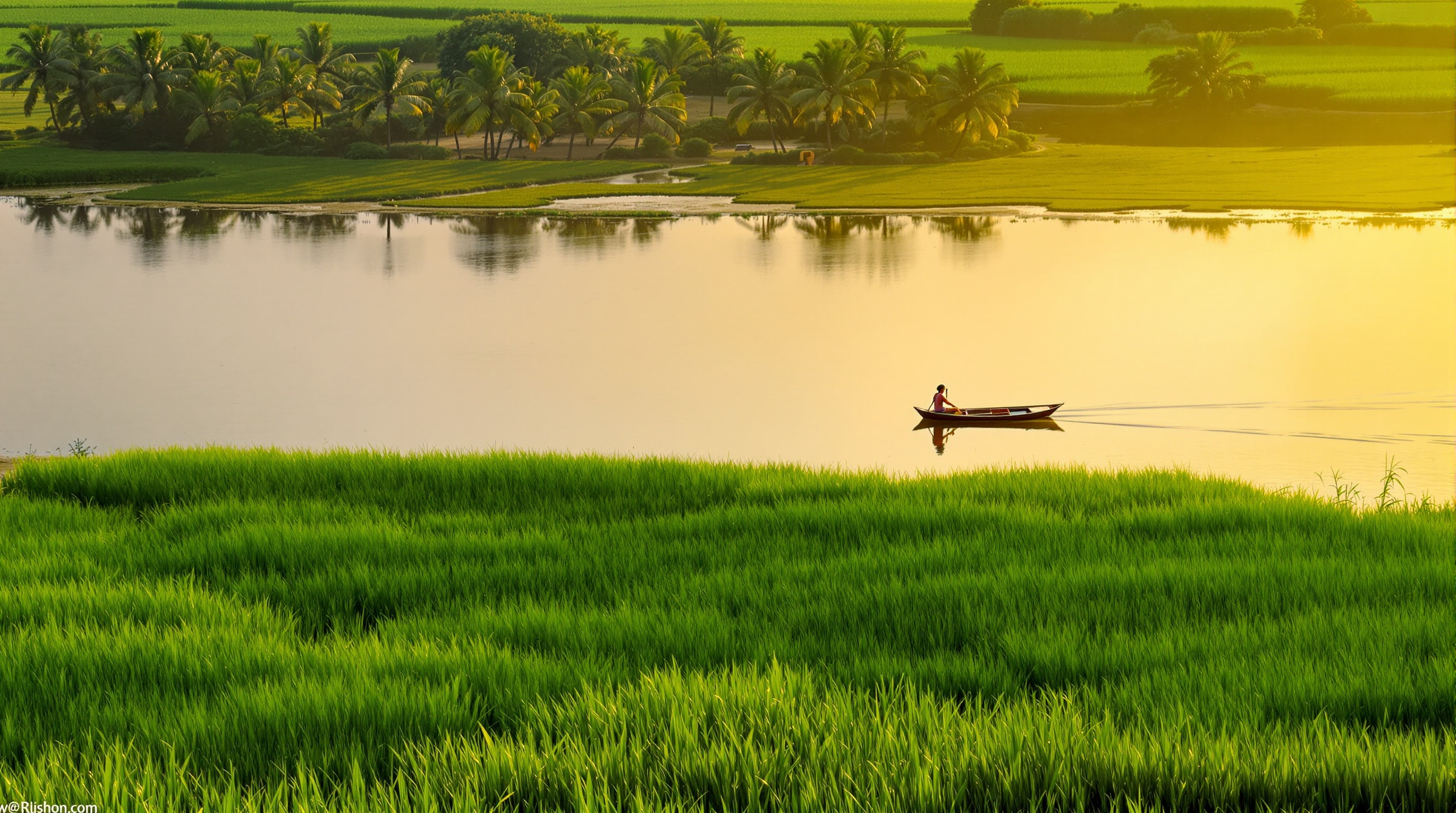
Estimates of the number of Hòa Hảo Buddhists vary considerably, from around one million to as many as several million, depending on how membership is defined and counted; figures of several million are commonly cited. What is not in dispute is the geography: the community is heavily concentrated in the western Mekong Delta — the provinces of An Giang, Đồng Tháp, Cần Thơ, Vĩnh Long, Hậu Giang and their neighbours — where in some districts it forms a large share of the population. This makes Hòa Hảo Buddhism one of the more significant religious communities in Vietnam, closely tied to a single region.
A tradition of charity
One of the most visible features of the community today is its strong ethic of charity and mutual aid, which flows directly from the Four Debts of Gratitude and the tradition's this-worldly emphasis. Hòa Hảo communities are widely noted for organised good works — building and repairing rural roads and bridges, running charitable kitchens and clinics, and relief efforts during the delta's seasonal floods. This practical compassion, rather than any elaborate institution, is much of how the tradition expresses itself in public life.
Family, congregation, and text
Because the tradition has no large monastic hierarchy and lost its founder early, its continuity rests on families, local congregations, and the founder's Sấm Giảng. Faith is transmitted at home and in the neighbourhood, through recitation and example, and observed above all in the home worship described on the practices page. The great annual gatherings — especially the founding anniversary on the eighteenth day of the fifth lunar month — bring the dispersed community together and remain the high points of the Hòa Hảo year.
Official recognition and its complexities
After decades of restriction following 1975, the Vietnamese state formally recognised a Hòa Hảo Buddhist representative body in 1999, and large-scale public observance resumed. As with several religions in Vietnam, the community's relationship with the state is layered: many adherents practise within the officially recognised structure, while some worship outside it. International bodies continue to document the situation; see, for example, the United Kingdom government's country policy note on Hòa Hảo Buddhism and the annual religious-freedom reporting of the U.S. State Department. This resource does not take a position in those matters; it notes them for completeness.
A diaspora abroad
Vietnamese migration since the 1970s has carried Hòa Hảo Buddhism beyond Vietnam. Small communities of adherents and cultural associations exist among the Vietnamese diaspora in North America, Australia, Europe, and elsewhere, keeping the tradition's observances and the memory of its founder alive far from the delta. These overseas communities are modest in size but help sustain the tradition's presence in the wider world.
The annual gatherings
If home worship is the quiet, everyday face of the tradition, its great anniversaries are the public one. Each year the founding day on the eighteenth of the fifth lunar month, together with the days commemorating the founder, draws immense crowds to Hòa Hảo village and the surrounding delta — among the largest religious gatherings in southern Vietnam. Pilgrims travel considerable distances; charitable kitchens feed the visitors; and the normally dispersed community becomes, for a few days, powerfully visible. These occasions renew the bonds of a faith that otherwise lives mostly in individual households, and they pass its memory and observance to a new generation.
Continuity and character
What is striking about Hòa Hảo Buddhism today is how faithful it remains to its origins. It is still lay-centred, still rooted in the delta, still plain in its worship, and still organised around gratitude, charity, and the founder's verses. For a tradition that weathered the loss of its founder and decades of upheaval, that continuity is itself notable — and it is why the story told across these pages remains a living one rather than only a historical one.