Religious Practice in Hòa Hảo Buddhism
The practice of Hòa Hảo Buddhism is deliberately plain. It was designed to be lived at home, by working people, without grand temples, professional clergy, or expensive ceremony. Its watchword is that religious endeavour "consists in improving oneself rather than in outward display."
A faith practised at home
Most adherents worship in their own homes rather than at large temples. The tradition teaches that sincere devotion and inner cultivation matter more than the setting, and it discourages the multiplication of statues and images. A household typically keeps a simple altar; where there is little room, even a modest arrangement suffices. Those who live among people of other faiths, or in cramped conditions, are taught that they may simply pray quietly at the appointed times — the practice is meant to fit real life, not to strain it.
The plain altar and the colour dà
A distinctive feature of Hòa Hảo homes is the use of a plain cloth in a brown or maroon colour known as dà (nâu sồng) at the place of worship, in place of images. The tradition explains the choice on two grounds: brown is the humble colour long associated with religious renunciants, and, as the blending of all colours, it stands for the harmony of all people without distinction of race or rank. The plainness is the point — it turns attention away from ostentation and toward the heart. Many homes also keep an outdoor bàn thông thiên, or "altar communicating with Heaven," a simple standing incense holder in the yard. The tradition's use of colour and emblem is described further on the symbols page.
Simple offerings
Offerings at the Buddha altar are kept to essentials, each with a symbolic meaning:
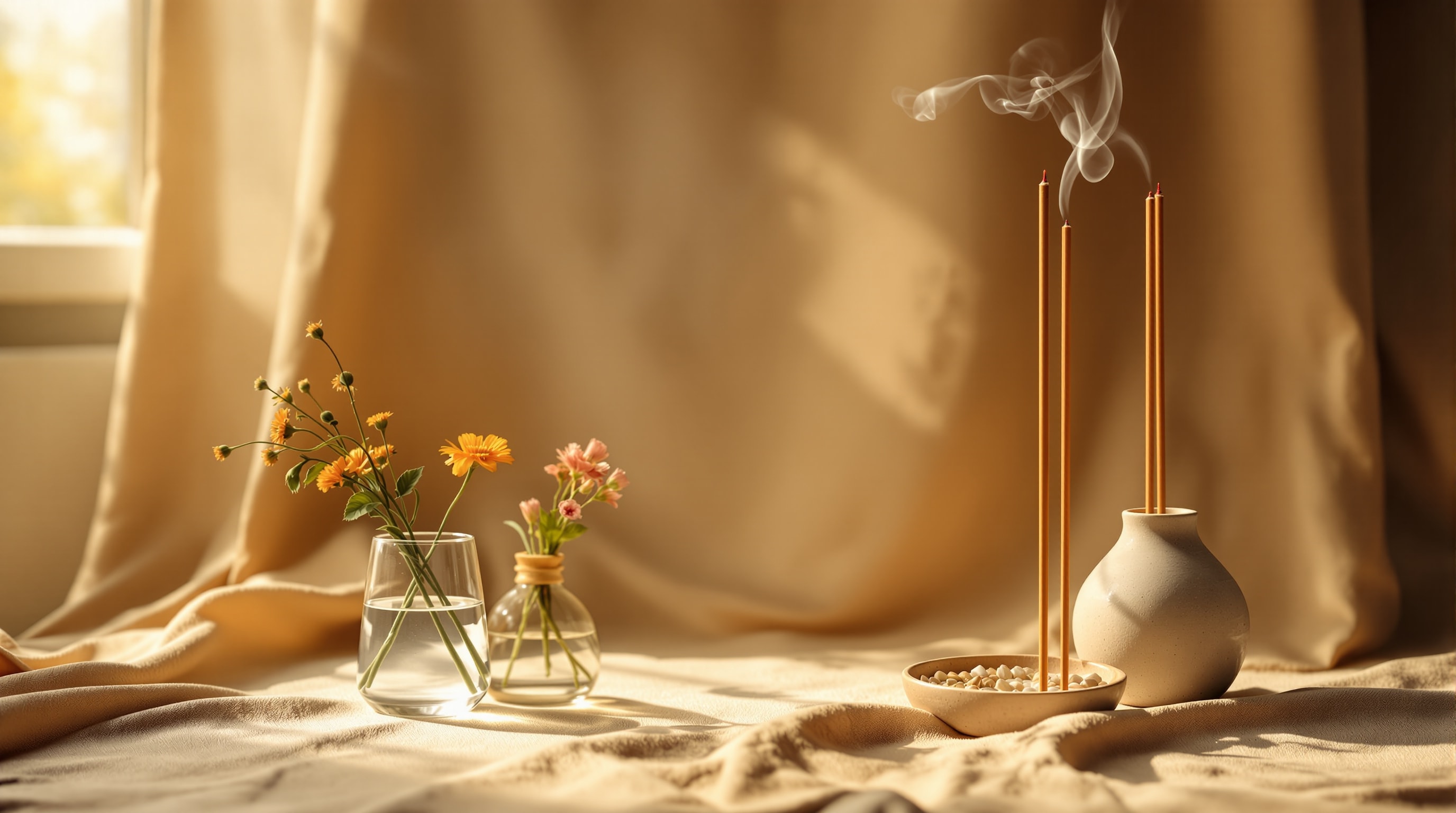
- Fresh water — representing cleanliness and clarity.
- Flowers — representing purity.
- Incense — offered to freshen and consecrate the air.
Beyond these, no elaborate offering is required at the Buddha altar. Ordinary food may be offered in the separate remembrance of ancestors. The contrast with more ornate temple practice is intentional: the tradition asks for a clean heart rather than a laden table.
Prayer and daily devotion
Adherents typically pray at set times, morning and evening, facing the altar and then outward toward Heaven, reciting prayers and passages drawn from the founder's Sấm Giảng. Devotion is woven into the rhythm of the day rather than reserved for special occasions. Because the tradition's teachings are written in memorable folk verse, they can be recited from memory, and this recitation is itself a central act of practice.
Conduct and vegetarian observance
Practice is not confined to the altar. Living by the Four Debts of Gratitude and avoiding harmful conduct are treated as the substance of religious life. Many adherents observe vegetarianism on fixed days of the lunar month as an expression of compassion and restraint, and abstain from intoxicants. Charity and mutual aid — helping neighbours, relieving hardship — are regarded as natural extensions of devotion rather than optional extras.
What the tradition sets aside
Understanding Hòa Hảo practice means noticing what it leaves out. It does not require pilgrimage to be valid, does not depend on a paid priesthood, does not multiply ceremonies, and warns against worshipping spirits of unknown origin or seeking blessings through lavish ritual. Reverence is directed to the Buddha, to ancestors and parents, and to those who served the common good. This economy of practice — much meaning, little machinery — is one of the tradition's defining characteristics, and a large part of its historic appeal.